Management · Program 04

The Right Medicine.
Every Day. Without Fail.

Affordable NCD medicines and the sustained human support that ensures they are actually taken

Having a prescription for hypertension or diabetes is meaningless if the medicine is unaffordable, unavailable, or taken incorrectly. Medication non-adherence is one of the leading — and most preventable — causes of NCD complications, hospitalisations, and deaths in Kenya. The Kenya NCD Resource and Support Center's Pharmacy and Medication Adherence Support program tackles this challenge from every angle: access, affordability, knowledge, and ongoing human support.

50%of NCD patients don't take meds correctly
Affordablesliding scale — no one turned away
Follow-upat home by community health promoters
Suppliesglucometers, BP monitors & more
What This Program Does

More Than a Dispensary —
A Support System

The Center's pharmacy is not a counter where medicines are handed over in silence. It is a staffed, relationship-based support service where every patient who receives medication also receives the education, practical tools, and ongoing follow-up needed to take it correctly, consistently, and safely over the long term.

Pharmacists and trained pharmacy staff hold individual medication counseling sessions at dispensing — explaining what each medicine does, how and when to take it, what side effects to watch for, and what to do if a dose is missed. Written summaries in plain language are provided. Patients with complex regimens receive pill organisers, visual timetables, or phone-based reminders.

For patients who struggle to afford their medicines, the Center operates a sliding-scale pricing model and maintains a medicines access fund — ensuring that cost is never the reason an NCD patient goes without treatment. Community health promoters conduct home follow-up visits to check adherence, identify barriers, and resupply patients who cannot easily return to the Center.
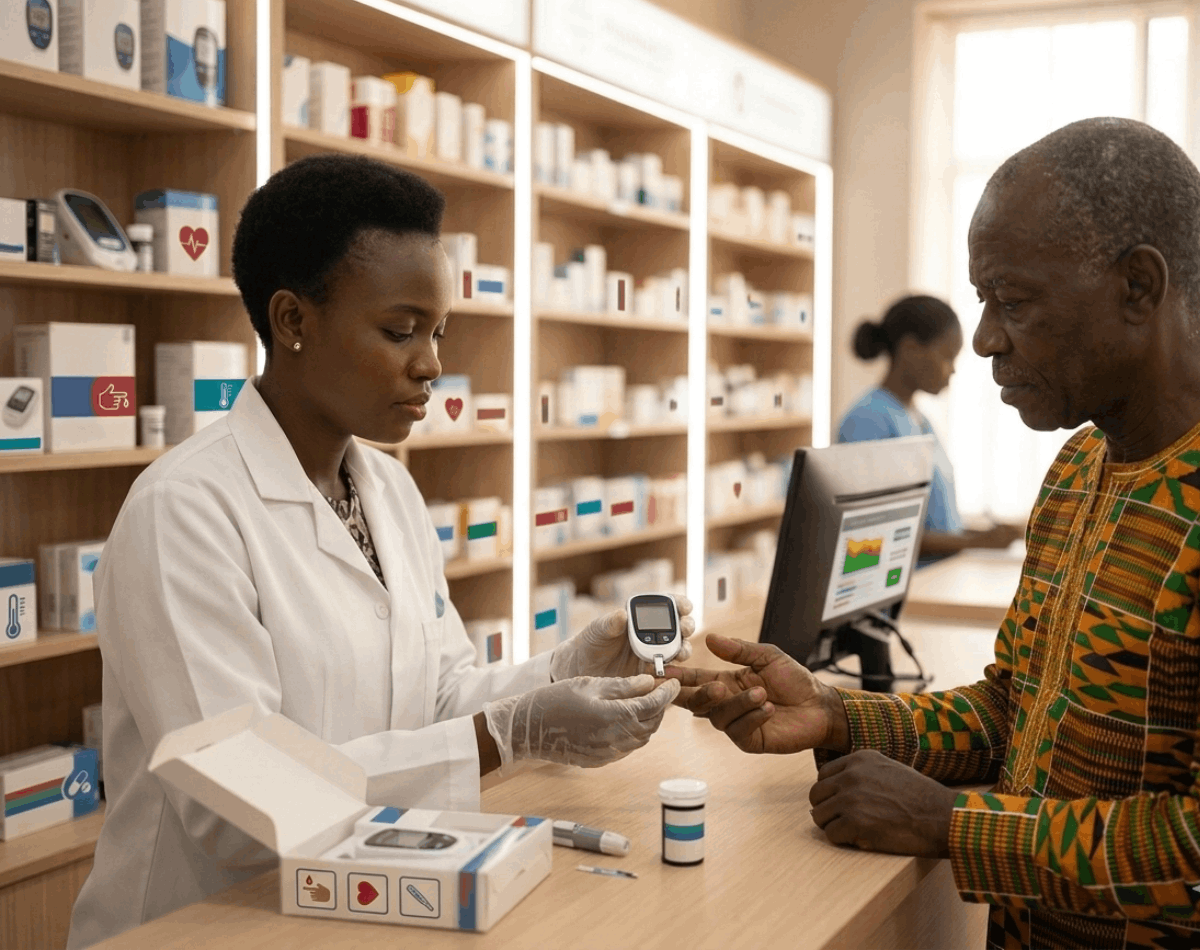

Pharmacy and medication support
The right medicine — every day, without fail
What We Provide

A Complete Medication Support System

💊NCD MedicinesAntihypertensives, antidiabetics, statins, bronchodilators, and other essential NCD medicines — stocked, affordable, and dispensed with counseling
🩸Monitoring SuppliesGlucometers, insulin, blood pressure monitors, test strips, lancets — essential tools for home self-monitoring provided to patients who need them
📋Medication CounselingIndividual education on each medicine — purpose, dosing, side effects, interactions, and what to do if a dose is missed or symptoms change
🔔Adherence ToolsPill organisers, visual timetables, phone-based reminders, and adherence calendars tailored to each patient's literacy level and routine
🏘️Home Follow-upCommunity health promoters conduct scheduled home visits to check adherence, address barriers, and resupply patients unable to travel to the Center
💰Medicines Access FundSliding-scale pricing and a dedicated access fund ensuring cost is never the reason a patient goes without essential NCD medication
Community health and medication support
Medicines reach people — wherever they are
Why It Matters

A Prescription Alone
is Not Enough

Studies consistently show that up to 50% of patients with chronic conditions do not take their medications as prescribed. In Kenya, the barriers are compounded: medicines may be unaffordable, unavailable at local facilities, poorly explained, or incompatible with daily routines and cultural beliefs about pills and chronic illness.

The consequences are devastating. Poorly controlled hypertension leads to stroke and kidney failure. Unmanaged diabetes leads to amputations, blindness, and end-stage kidney disease. These are not inevitable outcomes — they are the predictable result of a health system that prescribes but does not support.

The Center's pharmacy model is built on the conviction that adherence is a system responsibility, not a patient failure. When people have the right medicines at the right price, understand why and how to take them, and receive consistent follow-up from people they trust — they take their medicines. Outcomes improve. Hospitalisations fall. Lives are extended and enriched.