
Management · Program 06

When Seconds Count,
We Are There

A rapid emergency response and referral system ensuring no one faces an NCD crisis alone — wherever they are

A hypertensive crisis. A severe hypoglycaemic episode. A suspected stroke. These are acute NCD emergencies that kill or disable within minutes if not responded to promptly. In Khwisero and much of rural Kenya, the gap between a crisis and a trained first responder — let alone an ambulance — can be the difference between survival and death. The Kenya NCD Resource and Support Center's Emergency Response and Rapid Referral System closes that gap with trained personnel, equipped vehicles, and clear protocols that activate the moment a call comes in.

Rapidresponse — ambulance & motorbike units
24/7on-call community alert network
Warmhandoff — never abandoned mid-transfer
Fullcontinuity of care after referral return
What This Program Does

A Safety Net That
Actually Catches You

The Emergency Response and Rapid Referral System is the Kenya NCD Resource and Support Center's safety net — designed to respond immediately when an acute NCD complication occurs, stabilise the patient at the Center, and ensure safe, coordinated transfer to referral hospital facilities for advanced care when needed.

The system operates through a combination of equipped ambulances, motorbike first-response units capable of reaching remote locations quickly, and a community alert network of trained community health promoters who can identify a crisis and initiate the response chain within minutes. Every response team member is trained in NCD first aid — hypoglycaemia management, hypertensive crisis protocols, stroke recognition, and basic life support.

What distinguishes the Center's referral system from a simple transfer service is the warm handoff model. The Center communicates with the receiving facility before the patient arrives. Medical records are transmitted electronically. The patient is expected, not a surprise. And when the acute episode is resolved and the patient is discharged from the referral facility, they return to the Center — where their regular care team resumes their management with full knowledge of what happened.
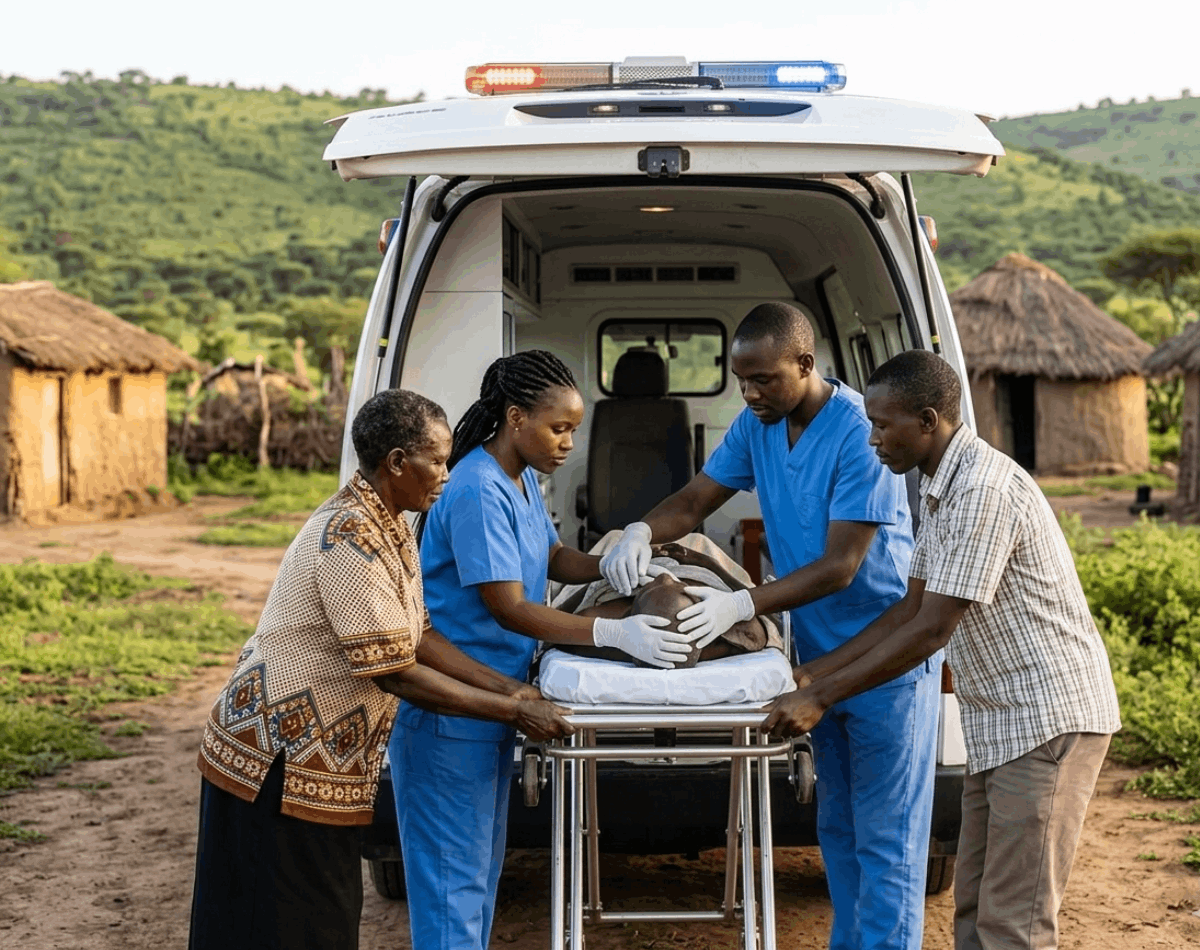

Emergency response and community health
When seconds count — we are there
Emergencies We Respond To

The Most Critical NCD Crises

Every one of these conditions can kill or permanently disable within minutes of onset — yet each is manageable with the right first response and timely transfer to appropriate care.

🩸

Hypertensive Crisis

Severely elevated blood pressure requiring immediate medication and monitoring to prevent stroke, heart attack, or organ damage

🍬

Severe Hypoglycaemia

Dangerously low blood sugar in diabetic patients — causing unconsciousness and death if not treated within minutes

🧠

Suspected Stroke

Rapid recognition using FAST protocol, immediate stabilisation, and urgent transfer — every minute of delay increases permanent brain damage

❤️

Acute Cardiac Event

Chest pain, arrhythmia, and signs of acute coronary syndrome requiring immediate assessment, stabilisation, and transfer

🫁

Respiratory Crisis

Severe asthma attacks, COPD exacerbations, and acute breathlessness in patients with chronic respiratory NCDs

🦷

Diabetic Complications

Diabetic ketoacidosis, hyperglycaemic hyperosmolar state, and severe foot infections requiring urgent clinical intervention

How It Works

From Alert to Safe Transfer — Every Time

1

Alert Received

Community health promoter, family member, or patient contacts the Center's emergency line. Dispatcher takes details and activates the appropriate response unit — motorbike for remote access, ambulance for transfer-ready cases.

2

First Response Dispatched

Trained responder reaches the patient with emergency supplies — glucose, oxygen, blood pressure medication, basic life support equipment. Patient assessed and immediate first aid administered.

3

Stabilisation at the Center

Patient brought to the Center for stabilisation, monitoring, and clinical review. For cases manageable at the Center, care continues on-site. For cases requiring hospital-level intervention, transfer is prepared.

4

Warm Referral & Transfer

Receiving facility contacted and briefed. Patient records transmitted. Accompanied transfer by trained personnel. The patient is expected — not a surprise arrival with no history.

5

Return & Continuity

When the patient is discharged from the referral facility, they return to the Center. Their regular care team is briefed on what happened and resumes their integrated management plan — preventing the next crisis.

Community emergency response network
From crisis to continuity — no one abandoned