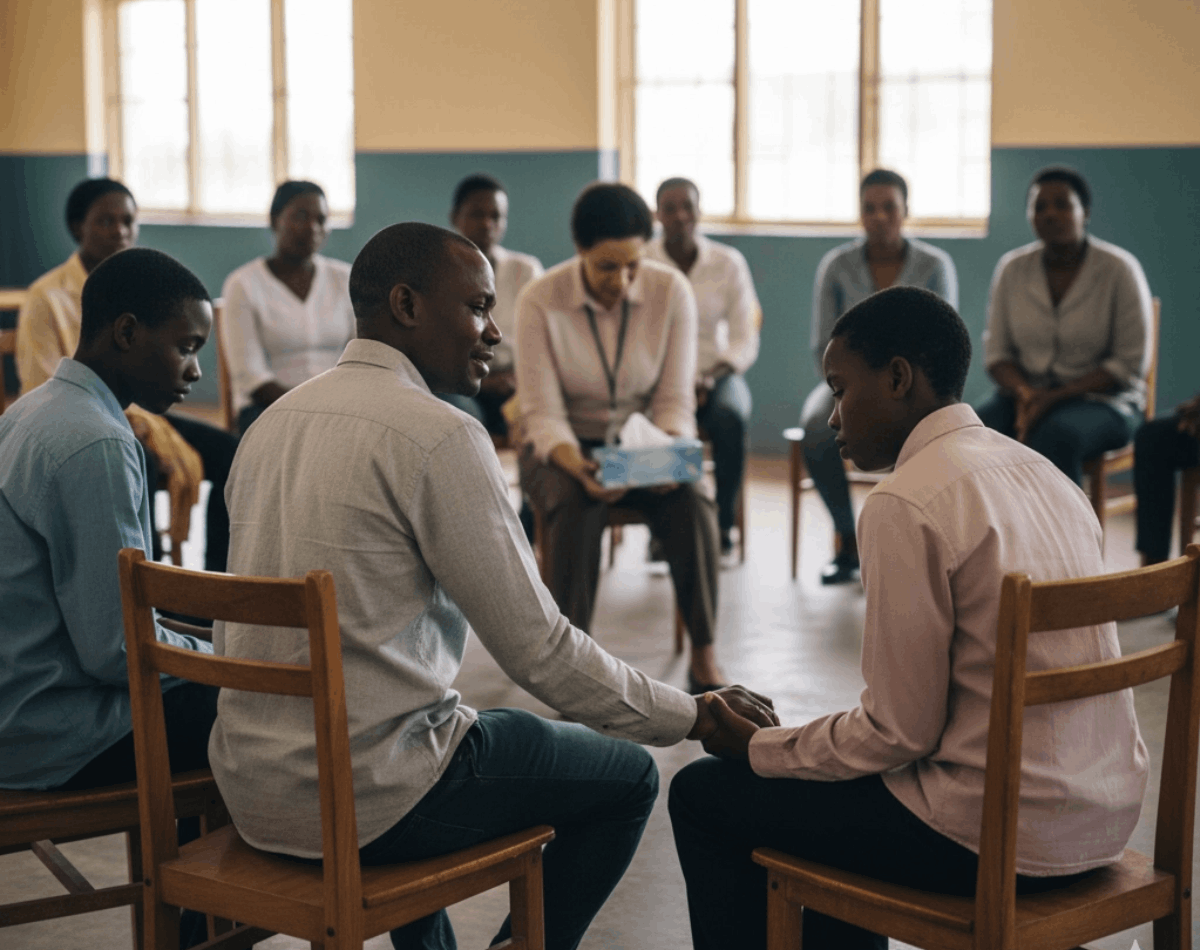
Individual and Peer Support Programs provide the psychosocial foundation that every other NCD program depends upon. A person who feels hopeless, isolated, or overwhelmed by their diagnosis will struggle to adhere to medication, attend appointments, or make lifestyle changes — no matter how good the clinical care around them. Emotional and peer support are not luxuries in NCD management. They are clinical necessities.
The program operates at two complementary levels. Individual counseling provides a private, confidential space for people to process their diagnosis, manage fear and grief, address depression and anxiety, and develop the inner resilience needed for long-term disease management. Sessions are conducted by trained counselors using evidence-based approaches — motivational interviewing, cognitive behavioral techniques, and solution-focused therapy.
Hope Circles — structured peer support groups — bring together people living with similar conditions to share experiences, strategies, and encouragement. Facilitated by trained peer leaders who are themselves living with NCDs, these groups create a community of shared understanding that no professional relationship can fully replicate. Knowing that others have walked this path — and are thriving — changes what feels possible.